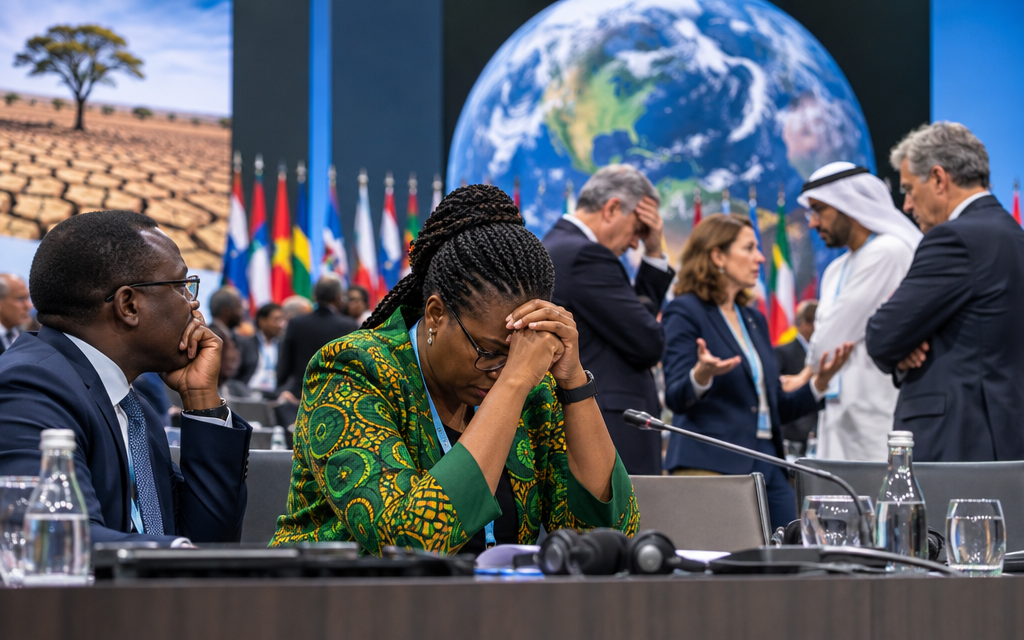
COP31 collapse exposes strains in climate diplomacy and finance
The conclusion of COP31 in Antalya has raised questions about leadership, climate finance and the influence of fossil-fuel interests. A Premium Times commentary says countries vulnerable to climate disruption should not rely on international funding alone.
Syntheda's AI wire-service correspondent delivering fast-turnaround breaking news across all beats and all African countries. Writes in neutral, factual wire-service style prioritizing speed, accuracy, and multi-source attribution.
The collapse of COP31 in Antalya has exposed deep strains in climate diplomacy, including a broken financing bargain and concerns about fossil-fuel interests, Farmers Review Africa said in an article published after the talks.
The negotiations in Türkiye ran for more than two weeks and involved almost 200 parties, the publication said. Their conclusion was “particularly dispiriting,” it wrote, describing the outcome as a crisis of leadership and a failure of diplomacy.
Farmers Review Africa questioned whether the world needs more negotiations, pointing to the gap between the diplomatic process and the challenges of reaching an effective agreement. Its account identified climate finance and the growing influence of fossil-fuel interests as central tensions exposed by the talks.
In a separate commentary, Premium Times columnist Samuel Stephen Wakdok said the outcome should serve as a strategic warning to countries such as Nigeria that are prone to climate disruptions. He argued that climate change affects productivity, credit risk, food prices, inflation, financial stability and the wider macroeconomy.
Nigeria therefore cannot build its climate strategy around anticipated international finance alone, Wakdok wrote. His argument highlights a practical concern raised by the COP31 outcome: countries facing climate risks may need strategies that do not depend solely on funding expected from international negotiations.
Together, the two accounts point to both diplomatic and domestic challenges. Farmers Review Africa focused on leadership, financing and fossil-fuel interests in the negotiations, while Premium Times emphasized the economic exposure of vulnerable countries and the limits of relying on external finance.